


Building Meaning to Life After Loss
The day a life shatters, the future does not always disappear all at once. Sometimes it vanishes in pieces.
A room feels wrong. A calendar becomes unbearable. A familiar song turns into a door you cannot open. The body keeps moving through ordinary tasks, but the old map no longer works. The route that once seemed clear, family, work, identity, plans, certainty, has been torn in places you cannot tape back together.
This is one of the oldest human questions: how does someone build a life after the life they expected is gone?
The answer is not to move on as if love, memory, or pain can be left behind like a box in an old house. The more honest answer is that we learn to move with. The loss comes with us. The love comes with us. The questions come with us. In time, joy may come with us too.
A meaningful life after loss is not built by replacing what was shattered. It is built by creating something strong enough to hold the broken pieces and everything that grows afterward.

The old map may never work again
After a great loss, many people spend years trying to return to the life they were “supposed” to have. That longing is natural. Grief reaches backward. It searches for the door, the decision, the morning before everything changed.
There is no shame in wanting the old world back.
But healing often begins when the soul stops demanding a road back and starts asking a different question: what can be built from here?
That question can feel cruel at first. It may sound like surrender. It may sound like admitting defeat. Yet there is a quiet mercy in it.
The day the map stopped working was not the day life ended. It was the day navigation had to change.
Before loss, a person may imagine life as a tower. Everything has its own level.
Family
Career
Identity
Faith
Plans
Certainty
A sense of control
Then something catastrophic happens. The tower falls. The instinct is to rebuild it exactly as it was, brick by brick, floor by floor. But grief changes the materials. Some pieces are missing. Some no longer fit. Some are too painful to touch.
A different kind of life may need a different shape.
Maybe it becomes less like a tower and more like a garden. Not as tall. Not as neat. More seasonal. More honest. A place where some things bloom, some things die back, some things return in a form you did not expect.
A garden does not erase ruin. It grows through it.
Survival is sacred, but it may not be the final word
There is a stage of grief where surviving is the whole assignment.
Getting out of bed counts. Eating something counts. Answering one message counts. Driving to the store and coming home counts. Breathing through another night counts.
No one should rush past this stage. Survival is not small. It is the body and spirit saying, in whatever faint voice they have left, “I am still here.”
But over time, some people feel another pull. They do not only want to survive. They want the suffering to become useful.
This can take many forms:
Speaking for people who have been silenced
Making art from pain
Raising money or awareness
Supporting someone newly grieving
Changing a law, a practice, or a family pattern
Telling the truth in a room where everyone else is afraid to speak
That impulse can be powerful. It can turn private anguish into public tenderness. It can keep love in motion. It can make pain less lonely for the next person.
But it can also become exhausting.
There is a hidden pressure in some healing stories, the belief that every wound must become a mission, every tragedy must produce something extraordinary, every sorrow must justify itself through visible good.
That is too heavy a burden.
Pain does not have to become a book, a film, a foundation, a speech, or a movement to matter. Some grief will become advocacy. Some will become creative work. Some will become quiet wisdom. Some will remain wordless.
All of it belongs.
Meaning can be quiet
A culture that praises grand transformation often misses the holy nature of ordinary healing.
Sometimes healing is allowing yourself to laugh without guilt.
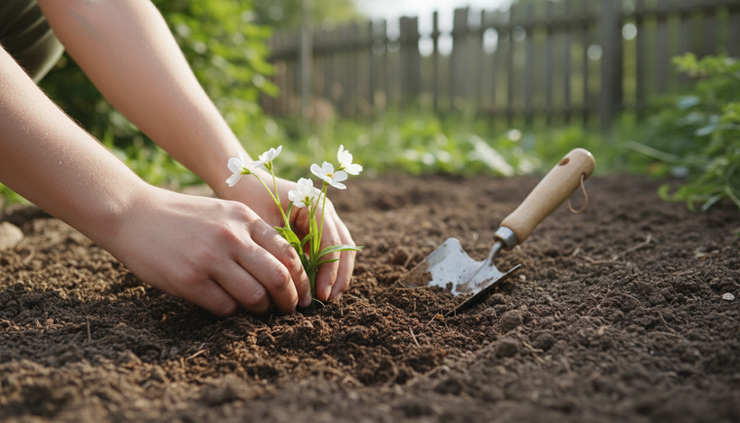
Sometimes it is planting flowers.
Sometimes it is taking your child to school and remembering to pack the lunch.
Sometimes it is making a film, writing a page, or speaking into a microphone with shaking hands.
Sometimes it is crying in the shower because you do not want anyone to hear.
Sometimes it is washing the dishes in silence.
Sometimes it is sitting in the car after an errand, unable to go inside yet, and letting the tears come.
These are not lesser forms of meaning. They are the daily architecture of a changed life.
Loss often narrows the world at first. The mind cannot imagine five years from now. It may not be able to imagine next month. So meaning has to become very near.
A cup of coffee held with both hands.
A walk around the block.
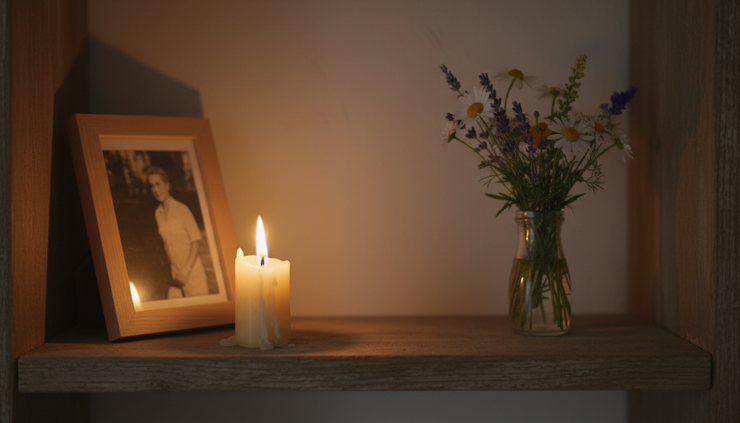
A candle lit at dusk.
A child’s sleepy voice from the back seat.
A meal left on a porch.
A friend who does not try to fix anything.
A meaningful life may begin again through these small, faithful acts. They do not announce themselves as miracles. They simply keep a person connected to the living world.
The broken pieces do not disqualify the life
Many grieving people carry a quiet fear that they are now too damaged for joy, too changed for peace, too complicated for love.
But brokenness is not the opposite of beauty. Often, it is part of the way beauty becomes more truthful.
A person who has suffered may become less impressed with surfaces. They may listen more closely. They may stop postponing tenderness. They may understand that ordinary days are not ordinary at all. They may carry both sorrow and gratitude in the same breath.
This does not make loss “worth it.” Some losses will never be worth it. Some tragedies cannot be balanced by any lesson or silver lining.
Meaning does not require calling the loss good.
It asks whether goodness can still be found, made, received, and offered in the life that remains.
That distinction matters. Forcing meaning too soon can feel like betrayal. It can turn grief into a performance. It can make people feel they are failing because they are not yet wise, peaceful, grateful, or useful.
Real meaning is usually slower. It respects the wound. It does not demand that the grieving person become inspirational on schedule.
There may be days when the only honest prayer is, “Help me get through this hour.” That, too, is a form of building.
Love changes shape, but it does not leave
One of the deepest fears after loss is that moving forward means leaving someone or something behind.
But love is not so fragile.
The relationship changes. The daily form may be gone. The voice, the routine, the touch, the shared future, all of that may have been taken. Yet love can remain present in memory, values, choices, rituals, and the way a person keeps living.
People carry love into new rooms.
They carry it when they cook the recipe.
They carry it when they tell the story again.
They carry it when they protect what mattered.
They carry it when they choose gentleness because they know how much pain the world already holds.
Moving forward does not require forgetting. It may mean learning how memory can walk beside the present without swallowing it whole.
This is delicate work. Some days memory comforts. Other days it cuts. Grief has its own weather. A song in the grocery store can undo a person. A birthday can make the air feel thin. A random Tuesday can ache more than a holiday.
Nothing has gone wrong when grief returns. It is not proof that healing failed. It is proof that love has depth.
Usefulness should not become a cage
When someone has endured great pain, the desire to help others can become a lifeline. It gives direction to anguish. It makes isolation less absolute. It says, “If this happened, let it at least shelter someone else.”
That desire can produce brave and beautiful work.
Still, there is danger in believing that suffering must always be converted into service. A person can become trapped by their own resilience. They may feel responsible for making every wound productive. They may feel guilty for resting. They may feel that joy must be earned through usefulness.
But grief does not need to be monetized, published, performed, or explained to be valid.
Some seasons ask for outward work. Others ask for privacy.
Some days a person can be a voice for others. Other days they need someone to sit beside them without asking for strength.
Both are honorable.
The life built after loss needs room for purpose, but also room for play, silence, anger, tenderness, and rest. It needs room for the whole person, not only the brave version.
There is meaning in helping others. There is also meaning in letting yourself be helped.
That can be hard for people who have become strong by necessity. They may know how to hold everyone else’s pain but feel ashamed of their own need. Yet receiving care is part of being alive. It does not weaken the story. It makes the story more honest.
Build something that can hold both
A life after loss does not have to choose between sorrow and joy. It must become wide enough for both.
That width is built slowly.
It may begin with one honest sentence: “I am not okay today.”
It may continue with one small act of care: a meal, a walk, a nap, a phone call.
It may grow through ritual: lighting a candle, visiting a place, saying a name, marking a date.
It may deepen through creation: music, gardening, prayer, writing, film, service, parenting, friendship.
It may strengthen through boundaries: leaving the room, saying no, refusing to explain grief to people who only want it tidy.
No single act rebuilds a shattered life. The building happens through repetition. Again and again, a person chooses some form of life without demanding that it erase the pain.
This kind of building is not dramatic every day. Often it looks like returning to ordinary things with a changed heart.
The groceries still need buying.
The bills still arrive.
The child still needs shoes.
The dog still needs walking.
The body still asks for sleep.
At first, these tasks can feel insulting. How can the world keep asking for errands when everything sacred has been altered? Yet over time, ordinary tasks can become threads. They pull a person gently back into the fabric of days.
Not all at once. Not perfectly. But enough.

Forward does not ask you to forget
There is no road back to the untouched life. That truth can feel brutal. It can also become a doorway.
Forward does not ask for denial. It asks for presence.
Forward does not demand that grief be neat. It asks that grief be allowed a place.
Forward does not require a person to become heroic. It asks for honesty, breath by breath.
Some days, building meaning after loss will look like courage. Other days, it will look like making soup. Some days, it will look like telling a story in public. Other days, it will look like turning off the phone and sleeping.
The shattered world does not get the final word simply because it shattered.
There is still love to carry.
There is still beauty to notice.
There is still work to do, and rest to receive.
There is still laughter that does not betray the tears.
There is still a future, though it may not resemble the one first imagined.
The life that comes after loss may never be simple. It may always contain an ache. But it can become real, generous, and deep. It can hold the broken pieces without being only broken. It can grow around absence without pretending absence is gone.
The map may have stopped working.
The road back may be closed.
But forward remains.
And forward, in its quiet and demanding mercy, asks only this: build with what is still here.



Comments